In commercial diving, there are a handful of components that absolutely cannot fail — and your umbilical sits at the top of that list. It carries air, communications, and strength from topside to diver. It’s literally the lifeline.
And like most gear that “never fails,” it will fail — usually at the worst possible time — if it isn’t maintained with purpose.
At Ocean Eye, we’ve serviced hundreds of umbilicals from all over the country, and the same issues show up again and again. The good news is that with the right routine, you can prevent most umbilical failures long before they happen.
Start With the Basics: Cleanliness & Regular Inspection
The most effective maintenance step is also the simplest:
Clean your umbilical after every job and inspect it as you do it.
During cleaning, look for:
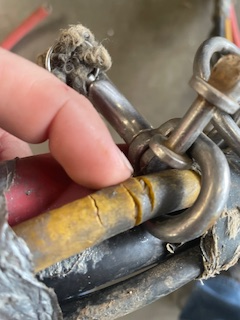
- Cuts, nicks, and abrasion on the outer jacket
- Soft spots, flat sections, or odd stiffness
- Pinched areas or out-of-round hose sections
- Corrosion on fittings or hardware
- Com line dents, exposed wire, or crushed insulation
Dirt and grit work their way into the jacket and act like internal sandpaper.
A few minutes with fresh water can save thousands of dollars in repairs.
Air Hose Integrity – The Heart of the Umbilical
The air hose is the single most critical component in the umbilical system. If your air hose is compromised, the diver is compromised.
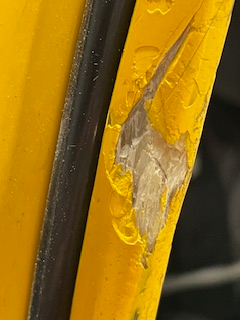
Check for:
- Blistering or bulging
- Soft or spongy sections
- Jacket separation
- Micro-cracks near fittings
- Loose, slipping, or corroded terminations
If you’re questioning it, replace it.
Air supply is not a place to gamble.
Communications – The Silent Failure Point
Divers often baby their helmets but ignore their comm lines — until the day they can’t hear topside.
Inspect for:
- Cuts in insulation
- Flat spots from compression
- Bent pins or corroded connectors
- Brittleness from UV and salt exposure
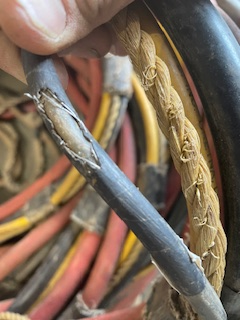
Coms typically fail “quietly” over time before going dead all at once. Catch damage early and you won’t be troubleshooting underwater.
Strength Member – Often Forgotten, Always Critical
Your strength member is the backbone of the entire umbilical. Damage here is serious and often hidden.
Check for:
- Frayed fibers
- Dry rot
- Fiber dust
- Irregular stiffness
- Terminations showing any movement or slippage
If you see fuzzy edges or fiber wear, evaluate immediately.
A compromised strength member can turn an otherwise healthy umbilical into a high-risk liability overnight.
Don’t add unnecessary load to hoses and com lines.
Maintain control by:
- Using proper figure-8 stacking
- Keeping color codes and markings clear
- Training tenders to identify early twist buildup
A clean deck layout prevents both damage and wasted time.
Storing Active & Spare Umbilicals
A properly maintained spare umbilical is just as important as your primary.
Store umbilicals:
- In a cool, dry location
- Away from direct sunlight
- Loosely coiled, not tightly wound
- On racks, never on concrete
- With clearly tagged inspection dates
An unused umbilical can deteriorate just as quickly as one that’s used daily if it’s stored poorly.
When to Call Ocean Eye
Some repairs should not be handled in the field.
Contact Ocean Eye, Inc. if you notice:
- Hose jacket separation
- Deep cuts or gouges
- Suspected internal hose damage
- Failed or loose terminations
- Compromised strength members
We specialize in umbilical inspections, reterminations, repair, and replacement.
If you’re unsure whether a component is safe — let us evaluate it.
Ocean Eye, Inc. — 610-621-5750
www.OceanEyeInc.com
Final Thoughts
An umbilical rarely fails because it was used — it fails because it wasn’t maintained.
Give it regular attention, respect the wear, and call us if you see something concerning.
Your gear is your lifeline. Protect it.
Dive safe.